Asia Pacific is having a record year. Vietnam attracted USD 50.36B in registered FDI in nine months, up 76.4%. South Korea logged its highest Q1 to Q3 foreign investment arrivals on record. Thailand received THB 1.47 trillion in BOI investment applications in the first half alone.
When capital floods every market at once, the useful question gets narrower: is this market right for us, and how would we know?
A feasibility study answers that before capital is committed. This guide covers what to check, where the risk sits, who to ask and in what order.
Why Asia Pacific market entry needs a feasibility study in 2026
Record inflows make the region look like an easy call. Read closely, the same 2026 data supports opposite decisions.
- Korea: manufacturing investment pledges fell 34.5%, while actual arrivals rose 110.6% (MOTIR).
- Thailand: digital projects account for THB 1.115 trillion of the THB 1.473 trillion total (Nation Thailand).
- Vietnam: registered FDI rose 76.4%, while disbursement grew 12.1% (VIR).
Pledges, disbursements and regional totals each tell a different story for your sector. To act on signals like these, a feasibility study breaks the entry decision into specific checks.
Five market analysis checks every feasibility study needs
Every Asia Pacific entry rests on five assumptions. Desk data covers part of each one, and people inside the market confirm the rest.
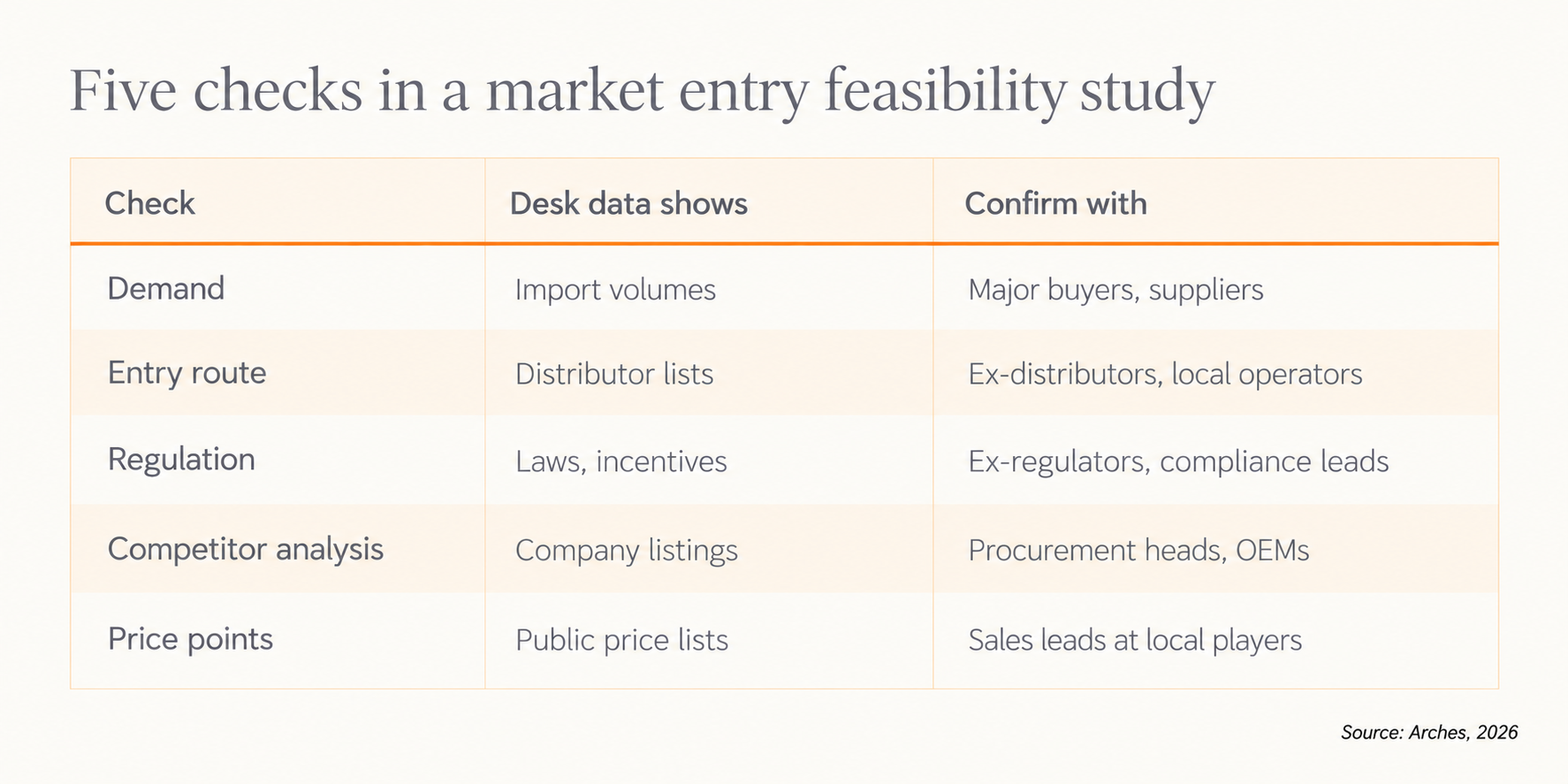
Table 1: Five checks in a market entry feasibility study
The third column is only as good as the people in it. A strong expert profile is specific, such as “Led resin procurement at a Thai packaging group until 2025.”
→ See how leading consulting firms find the right industry experts in Asia.
The five checks apply everywhere, and each market concentrates its risk in one of them.
Where each Asia Pacific market concentrates its risk
Japan, Korea and Southeast Asia attract capital for different reasons. Each also puts its highest risk on a different check.
Japan market entry depends on the right partner
Government support is strong, including a 7% tax credit and English-language one-stop help. Entries stall instead on partners, local decision authority and long trust cycles. The entry route check carries the most weight.
South Korea calls for deeper competitor analysis
Inflows concentrate in clean energy, ICT and data centers. Supply chains run through large business groups, and incentives vary by zone. Knowing who controls procurement matters more than knowing who is listed.
Southeast Asia market demand varies by sector
Vietnam is a manufacturing base, with manufacturing at 50.3% of registered FDI. Thailand is a digital and electronics hub. Indonesia is building metals and downstream processing. Compare countries by the role each plays for your product, rather than by total inflows.
Knowing where the risk sits tells you what to check first. The next step is running those checks in the right order.
From feasibility study to go-to-market strategy in four steps
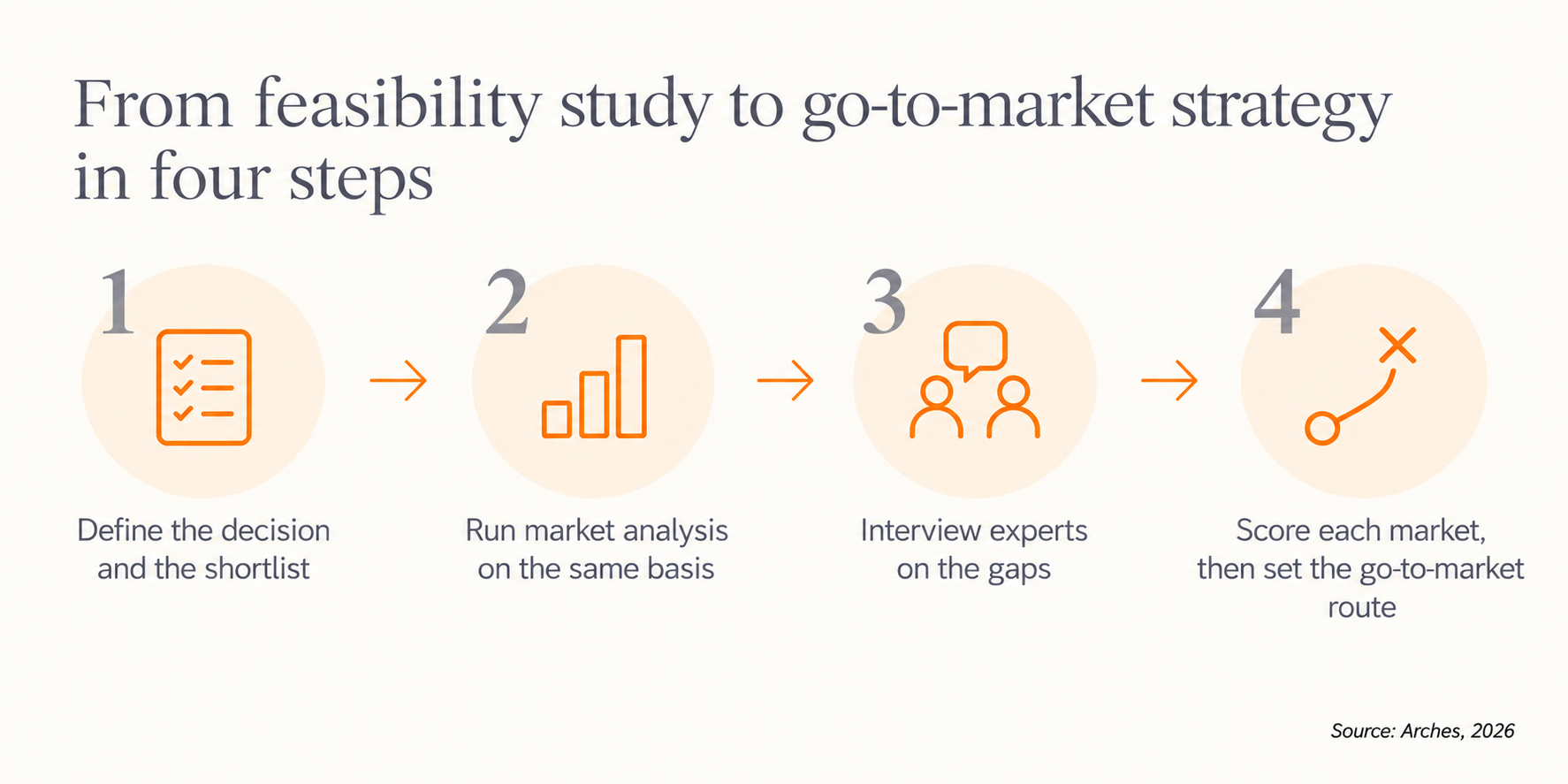
Four steps keep the comparison fair and the decision traceable.
- Define the decision and the shortlist.
- Run market analysis on the same basis for every candidate.
- Interview experts on the gaps. Where data and experts disagree, the reason is often the insight.
- Score each market, then set the go-to-market route. Work from product to demand to entry model.
In one multi-country engagement, our team combined customs data, a regulatory review and 12 interviews with major buyers and suppliers over 12 weeks, giving the client one consistent view across every candidate market.
→ Read how much to budget for an Asia market entry study.
How expert insights strengthen a feasibility study
Desk research shows where a market is heading. It rarely shows how distributors, regulators or buyers behave once you arrive. Expert interviews close that gap, testing each assumption in a feasibility study before capital is committed.
→ Explore four ways expert networks close the gaps that secondary research alone cannot reach.
How Arches supports APAC market entry research
Arches supports corporate strategy, new business and R&D teams through custom expert recruitment across Japan, Korea, Vietnam, Thailand and Indonesia, drawing on a network of 200,000+ experts.
With access to former distributors, regulators, procurement heads and local operators, plus a team spanning 15+ nationalities, we support market analysis, competitor analysis and go/no-go decisions across the Asia Pacific region.
→ Contact Arches to connect with the right experts for your next market entry study.
If your team is weighing an Asia Pacific market and needs clarity before committing, Check out our Custom Research and Consulting service here.
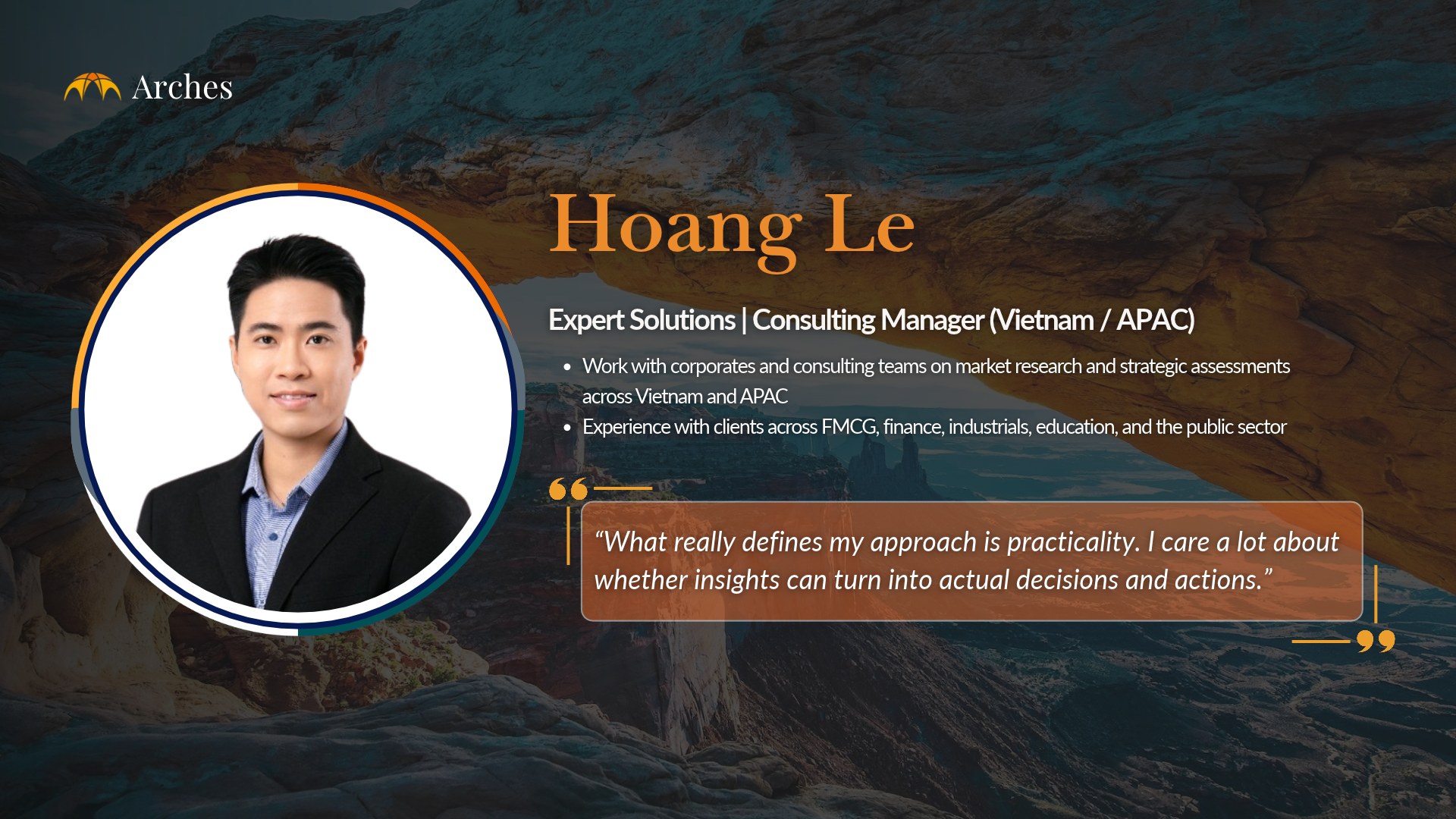
To discuss how Custom Research and Consulting turns a feasibility study into a clear go-to-market strategy, meet Hoang Le, our Consulting Manager. He works closely with corporate and consulting teams on early-stage market assessments across Japan, Korea and Southeast Asia.
FAQ
What is a feasibility study for market entry?
A feasibility study tests whether a market fits your product, entry route and budget before capital is committed. It combines desk-based market analysis with interviews that confirm what the data cannot show.
Why is competitor analysis harder in Asia Pacific?
Many players are private and disclose little, especially in Korea and Southeast Asia. Interviews with procurement heads, OEMs and former employees fill the gaps in public filings.
Follow Arches on LinkedIn to get the latest updates from us.
Subscribe to Arches’ monthly newsletter for grounded perspectives from experts across Asia and beyond, where global decisions meet local insights.