
Understanding Data Privacy Risk in Expert Networks: How Arches Protects You
For Experts

A message arrives out of nowhere. Someone from an expert network wants to connect, and the first reaction is rarely excitement. It is a question, sometimes two: “How did they find me?” and “What will they do with my data?”
Those questions are fair, and they deserve a straight answer. Being part of an expert network means being trusted with real opportunities, but that trust only works both ways. This article breaks down exactly how experts are found, what information is collected, and how that information is looked after, so the decision to join never has to feel uncertain.
How an Expert Network Identifies the Right People
Getting contacted by an expert network is not random. Networks work off a specific request from a client, and that request comes with real criteria: industry, role, seniority, region, sometimes years of experience in a narrow area. A name only comes up when a profile matches what a client is actually looking for.
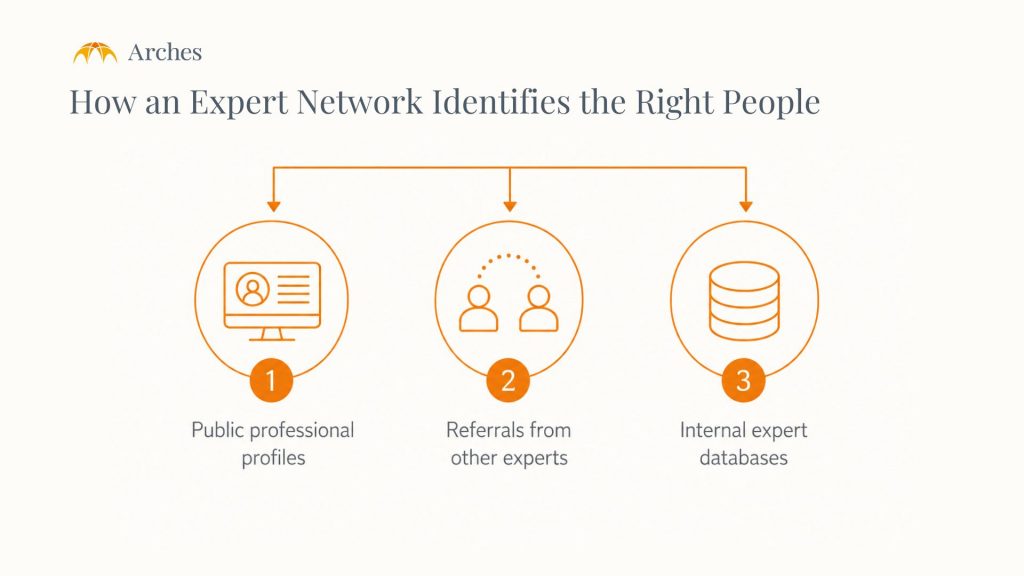
An expert is typically identified through one of three channels:
- Public professional profiles.
Researchers search platforms like LinkedIn for people whose job history fits the project, the same way a recruiter searches for a candidate. This comes from information already made public, not private or hidden data.
- Referrals from other experts.
Once someone is active in a network, they are often asked if they know others with similar expertise. Many experts first hear about a network this way, through a colleague or industry peer.
- Internal expert databases.
Networks keep records of professionals who joined in the past. If a new project fits someone’s background, they may be contacted again rather than sourced fresh.
Once contact is made, it usually comes attached to a specific project, along with the details an expert needs to decide if it is the right fit: the topic, the client’s request, and what participation would involve. From there, an expert can choose to accept or decline based on relevance and availability. For a full walkthrough of what that process actually looks like, it helps to see each stage in order before saying yes.
What an Expert Network Actually Collects, and Why
A well-run expert network only collects what is needed to match the right person to the right project. It does not need, and should not ask for, anything beyond that.
Information typically collected:
- Company name
- Job title and seniority level
- Geography or location
- Rate or fee expectations
- Phone number
- Email address
Information a reputable network does not collect:
- Financial records
- Private communications
- Anything outside a professional profile
If a request ever feels like it goes beyond standard professional details, it is worth pausing and asking questions. Similar warning signs tend to show up around how a network handles payment, so it can be a useful reference point when sizing up a network overall.
How a Trusted Expert Network Protects Your Data
Every part of an expert’s decision to join comes down to a few practical things: who is checking your background, how your data is kept current, and whether confidentiality is a two-way commitment. Arches approaches each of these directly.
- Identity and background checks before anyone joins.
Verifying who an expert is, using internal resources or trusted third party services, is a standard step before any match with a client. This protects both sides. It confirms the expert is who they say they are, and it gives clients confidence in who they are speaking with. This is built into Arches’ process from the start.
- Privacy that keeps up with a changing landscape.
Protecting expert data is not a one-time setup. It takes continuous work as standards evolve. At Arches, this responsibility sits with a dedicated IT team, who monitor the database daily, apply security updates as they become available, and manages access controls so expert information stays protected as the network grows.
- Confidentiality that runs in both directions.
Experts are asked to keep client information confidential, and Arches holds itself to the same standard in return:
- Information is not disclosed outside Arches without permission and is not used for any purpose beyond the original engagement
- During interviews or consultations, an expert never needs to answer questions involving confidential information, or information that could put themselves or their company at a disadvantage
- Experts can update their profile, decline a project, or step away from the network at any time
The complete terms behind these commitments are available for anyone who wants the full details: Arches Terms of Use.
For a broader look at what working with Arches actually involves, from onboarding to ongoing collaboration, this guide covers it in full: collaborating with Arches.
Built on Trust, Backed by Transparency
Trust is built the same way expertise is: through consistent, transparent action over time. Every step, from the moment an expert is found to the moment their data is stored, is designed to be clear and accountable. This is what allows clients and experts to work together with full confidence.
Questions about data or how the process works are always welcome, with support only a message away. For professionals ready to see what expert network opportunities look like firsthand, sign up here:
→ Join us as an Arches Expert.
- Follow Arches on LinkedIn for live updates.
- Subscribe to the Arches’ newsletter for monthly insights from our network across Asia and beyond.
