
Are Expert Networks Legit? 5 Common Expert Network Risks You Need to Know
For Clients

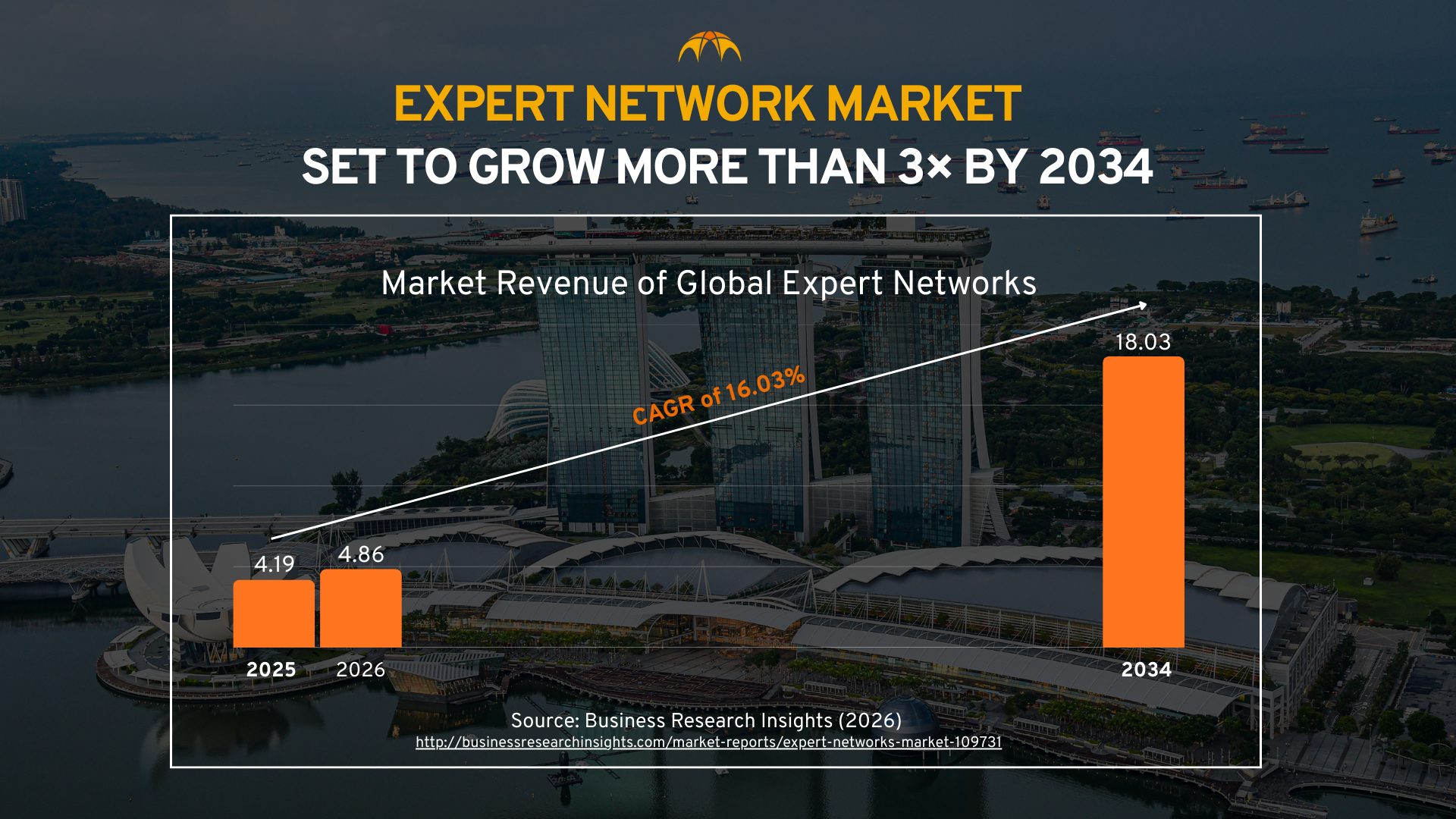
Expert networks are widely used by consulting firms, private equity funds, and corporate strategy teams to support faster, better-informed decisions. The global expert network market is expected to reach USD 4.86 billion in 2026 and is projected to grow to nearly USD 18.03 billion by 2034 (Business Research Insights, 2026).
→ To better understand the mechanics behind expert networks, see our guide: Unlock Market Insights: How Expert Networks Actually Work?
As adoption grows, questions around expert network risks become more prominent. A key question is: are expert networks legit and safe to use?
In an AI-driven environment where information is easy to access and reuse, the real risk is no longer just speed but accuracy, compliance, and trust. When expert services -often used alongside internal research- support strategic direction, these expert networks risks directly affect decision quality.
→ See when expert services matter most
Below are five key expert network risks, along with practical ways for clients to manage them.
The 5 most common expert network risks
1. Regulatory & compliance risk
You may face legal or regulatory exposure if expert conversations cross compliance boundaries or involve restricted information.
For example, during a call, an expert casually shares non-public performance details about a competitor. Even if unintentional, this can create compliance issues for the client using that information.
How to avoid it
- Keep discussions focused on public information and past experience
- Avoid forward-looking or deal-specific questions
- Set clear compliance boundaries before each call
- Work with expert networks that actively enforce compliance standards
2. Irrelevant or poor expert matching
Speaking with experts who lack direct, recent, or relevant experience leads to vague insights and wasted time.
How to avoid it
- Clearly define your project scope and decision objective
- Prioritize experts with hands-on, recent experience
- Validate fit before committing to longer discussions
- Replace experts quickly when alignment is off
3. Biased insights
Individual experts naturally bring views shaped by their own roles, companies, or markets, which can distort decision-making.
For example, an expert who spent most of their career in large organizations frames solutions around scale and resources that may not apply to smaller or emerging-market contexts.
How to avoid it
- Speak with multiple experts across roles or regions
- Treat expert calls as inputs, not final answers
- Compare perspectives to identify patterns and gaps
- Focus on understanding why opinions differ
4. Data privacy & information handling risk
Risks arise when call recordings, transcripts, or notes are accessed, stored, or reused without proper controls, such as when expert call notes or transcripts are retained or shared internally beyond their intended use.
How to avoid it
- Clarify how expert call data is stored and retained
- Limit access to call materials to relevant teams
- Avoid reusing insights outside the original scope
- Work with expert networks that follow clear privacy standards
5. AI-Related insight quality risk
As AI tools are increasingly applied across research, analysis, and reporting, they are also becoming more common in expert consulting workflows. While AI can improve speed, it may reduce depth and accuracy if used without clear boundaries.
For example, some organizations rely on AI-generated reports or summaries to support decision-making. This raises concerns that experts may also depend on AI tools when preparing or delivering advice, resulting in generalized responses that lack firsthand insight or real-world nuance.
How to avoid it
- Prioritize live expert discussions grounded in personal experience
- Treat AI-assisted outputs as supporting material, not expert judgment
- Ask experts to speak from direct involvement rather than secondary sources
- Work with expert networks that set clear expectations around AI use
How Arches mitigates these expert network risks
We understand the concerns clients have when using expert networks. In practice, the most effective way to manage expert network risks is to work with a trusted and experienced expert network partner.
At Arches, risk mitigation is built into how experts are selected, matched, and engaged.
- Consulting-Standard Compliance
Experts receive clear compliance briefings before each call to keep discussions focused on permissible topics. This helps clients access real-world experience without increasing regulatory exposure.
- 10-minute FREE fit check to avoid expert mismatch
Clients can assess expert fit within the first 10 minutes of the scheduled expert call at no cost. If the expert is not a good match, the call can be cancelled. This will save time and budget while ensure only relevant experts move forward.
- Custom expert sourcing for niche and complex needs
Our team of 250+ professionals from 15 nationalities supports the vetting of niche and hard-to-reach experts based on client-specific requirements. This approach goes beyond database matching and delivers higher alignment for complex or specialized projects.
- Privacy-first expert services
Expert call data is managed under controlled access and limited retention practices, aligned with Arches’ Privacy Policy and Terms of Use. No transcripts are generated unless explicitly requested and approved by the client, ensuring clarity and confidence in data handling.
By combining strong compliance controls, high-quality expert screening, and manual recruitment for niche needs, Arches helps organizations reduce expert network risks while improving decision quality.
At Arches, strong risk management is what allows us to consistently deliver our four core expert network services. Learn more about 4 Core Arches’s Services Help Close Information Gaps.
For teams that rely on expert insight to move forward with confidence, the right expert network partner makes a measurable difference.
FAQs
Q1. How does Arches reduce legal and regulatory risk during expert consultations?
Arches requires experts to avoid sharing confidential or material non public information, to decline projects that create conflicts of interest, and to report improper requests. Certain situations such as competitor consultations or IPO related projects are restricted to limit regulatory exposure.
Q2. How is confidentiality protected when sensitive market insights are shared?
Experts are obligated to keep consultation details confidential and to use information only for approved purposes. Access to consultation materials is governed by Arches’ privacy policies and contractual controls, helping safeguard sensitive research.
→ Start a conversation with Arches
→ For experts interested in sharing your insights, sign up here
- Follow Arches on LinkedIn to get the latest updates from us.
- Subscribe to Arches’ monthly newsletter for grounded perspectives from experts across Asia and beyond, where global decisions meet local insights.
