
Commercial Due Diligence: Critical Insights for PE Firms
For Clients

Virtual data rooms provide a detailed view of a business. Financial statements, market reports, and management presentations help investors understand historical performance and evaluate investment opportunities.
The challenge is that deal decisions are made in real time.
Customer sentiment shifts. Competitive dynamics evolve. Operational realities change faster than most diligence materials can capture.
As deal timelines compress and valuations remain elevated, many private equity firms incorporate expert interviews early in commercial due diligence to test assumptions, validate market signals, and identify risks before they become costly surprises.
The Core Friction in Commercial Due Diligence Today
Market Validation Cannot Be Found in Databases
The volume of available data has increased dramatically. Yet market validation remains one of the most difficult parts of commercial due diligence.
Reports can estimate market size. Financial statements can explain historical performance.
Neither can reliably answer questions such as:
- Are customers actively considering alternatives?
- Is pricing pressure increasing?
- Are competitors seeing the same growth story?
- Is demand likely to remain stable after the acquisition?
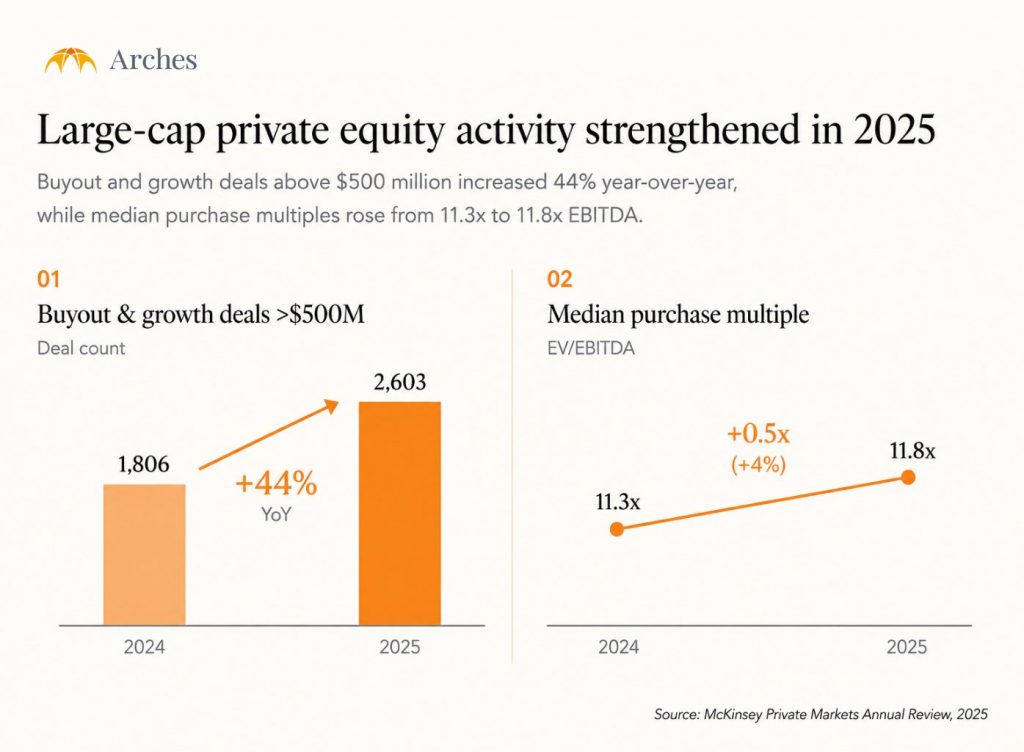
This challenge has become more important as private equity deal activity accelerated in 2025. According to McKinsey, buyout and growth deals above $500 million increased 44% year-over-year, while median purchase multiples rose from 11.3x to 11.8x EBITDA (McKinsey, 2026). As assets become more expensive, the cost of getting a key market assumption wrong becomes significantly higher.
In this environment, validating demand, competitive dynamics, and customer behavior matters as much as analyzing historical performance.
The problem is that many of these signals do not appear in databases until months later.
Customers may already be evaluating alternative vendors. Competitors may already be changing pricing strategies. Suppliers may already be seeing demand soften.
By the time these shifts appear in published reports, the deal may already be signed.
This is why market validation remains one of the most important and most difficult parts of investment due diligence.
The Hidden Cost of Misaligned Insights
Speed matters in commercial due diligence.
Investment teams often have only a few weeks to assess opportunities, develop recommendations, and reach investment committee decisions. Deloitte notes that M&A decisions are frequently made under compressed timelines and significant pressure.
Every diligence activity should help move the investment thesis forward.
However, not all expert conversations create equal value.
An expert may have industry experience but lack exposure to the specific customer segment, geography, or competitive dynamics being evaluated.
The result is often familiar:
- Additional interviews become necessary
- Research timelines expand
- Teams spend more time filtering information
- Critical decisions move closer to deadlines
The hidden cost is the time lost pursuing insights that do not directly address the investment question.
The strongest diligence teams focus on relevance rather than volume. The goal is not more conversations. The goal is faster conviction.
→ Explore what you’re actually paying for when using an expert network.
Where Data Rooms Fall Short During Commercial Due Diligence
Customer Retention Does Not Always Equal Customer Loyalty
A company may report healthy retention rates and recurring revenue growth.
The assumption is often straightforward: customers are satisfied and likely to stay.
However, retention metrics do not always explain why customers remain.
Long-term contracts, switching costs, procurement complexity, or a lack of alternatives can temporarily mask dissatisfaction.
For investors, the critical question is not whether customers stayed last year.
It is whether they will stay after the acquisition.
This is one reason Bain approaches private equity due diligence by testing investment theses through conversations with customers, suppliers, and competitors rather than relying solely on reported performance metrics.
Market Growth Does Not Guarantee Competitive Strength
Industry reports may show a growing market. Management may project continued expansion. Yet market growth does not necessarily translate into growth for every participant.
Competitive positioning, pricing dynamics, customer preferences, and execution capability can all influence whether a company captures its share of future demand.
This is why commercial due diligence extends beyond market sizing exercises. The key question is not whether the market is growing.
It is whether the target company is positioned to benefit from that growth.
Emerging Risks Often Appear Before Public Reports
Many investment models assume that current market conditions will continue.
In reality, industries evolve continuously.
- Competitive landscapes shift.
- Customer expectations change.
- Regulatory priorities evolve.
Some of these developments appear in public data only after their impact becomes visible.
Others are first discussed among industry participants long before they reach market reports.
For investors, understanding how operators, customers, suppliers, and former executives view emerging changes can provide a valuable layer of context that historical data alone cannot provide.
→ Discover four methods expert networks help investors uncover critical information gaps.
Optimize Your Commercial Due Diligence Services with Arches
Strong investment decisions depend on validating the assumptions that matter most.
Arches helps private equity firms access highly relevant experts quickly, so diligence teams can focus on answering critical investment questions rather than searching for the right sources.
Our approach combines:
- Precision custom recruitment aligned to the investment thesis and diligence objectives
- Localized market expertise with first-hand knowledge of customer behavior, competitive dynamics, regulatory developments, and operational realities
- Global execution capabilities across North America, EMEA, LATAM, and APAC to support fast-moving deal timelines
Whether evaluating market attractiveness, customer demand, competitive positioning, or operational improvement plans, Arches helps investors gain targeted perspectives that strengthen conviction and accelerate decision-making.
For teams preparing for upcoming opportunities, speaking with Arches can help identify the most effective expert engagement strategy for your diligence process.
→ View our guide to choosing the right expert network for your diligence needs.
Frequently Asked Questions
When should investors engage an expert network during due diligence?
Many investors engage expert networks during the early fact-finding and hypothesis-testing stages of commercial due diligence, rather than waiting until recommendations are already being finalized.
Early expert input helps validate assumptions, identify risks, and shape diligence priorities before key investment decisions are made.
Which expert networks support commercial due diligence projects?
Several expert network firms support commercial due diligence and investment due diligence projects, including: GLG, AlphaSights, Third Bridge, Guidepoint, Arches
Different expert networks specialize in different areas. Depending on the scope of the project, geographic coverage, industry focus, and compliance requirements, organizations may choose the provider that best aligns with their diligence needs.
→ Start a conversation with us
Follow Arches on LinkedIn for live updates.
Subscribe to the Arches’ newsletter for monthly insights from our network across Asia and beyond.
